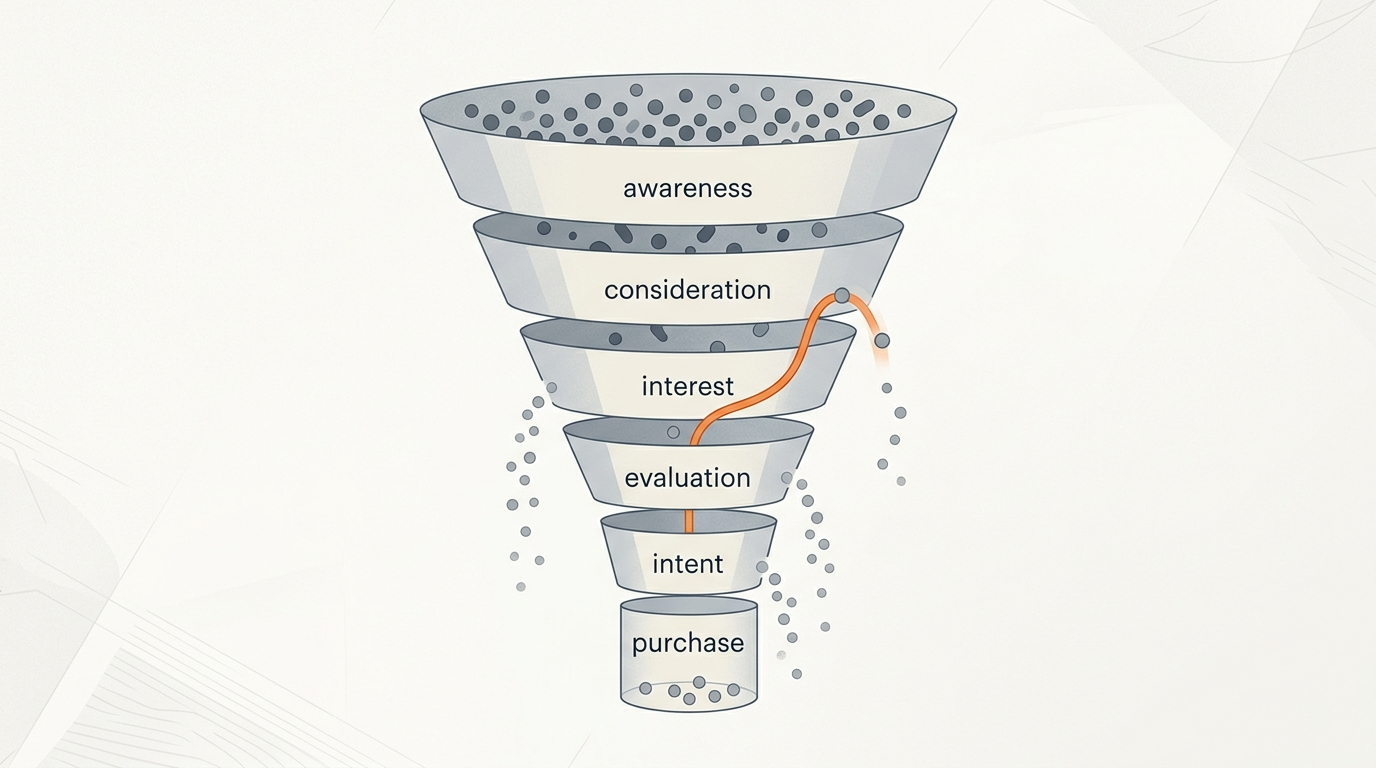
The lead isn't cold. It was never warm to begin with.
This is the follow-up problem. And almost nobody in real estate talks about it honestly.
The numbers are worse than you think
Let's start with the uncomfortable data.
According to NAR's 2025 report, 78% of home buyers end up working with the first agent who responds to them. Not the best agent. Not the most experienced. The first one who picked up the phone or replied to their message.
Meanwhile, the industry-wide internet lead conversion rate sits at 2 to 3%. For every 100 leads that come in through Zillow, Realtor.com, or your website, 97 of them will never become a transaction. REsimpli's 2024 data puts the dead lead rate at 42.83% — nearly half of every pipeline.
Most agents look at those numbers and blame lead quality. "Internet leads are garbage." "They're just browsing." "They weren't serious."
Some of that is true. But here's what the same data shows on the other side:
That gap has nothing to do with lead quality. It's entirely about agent behavior.
The follow-up cliff
Response time is only half the problem. The other half is what happens after the first contact.
The National Sales Executive Association's data, updated through Inman's 2025 benchmarks, tells a story that's almost hard to believe:
Read those numbers again. Nearly half of all agents stop trying after a single message. But four out of five deals that actually close needed at least five touches to get there.
This isn't a lead quality problem. It's a persistence problem disguised as one.
And the data gets more specific. Agents who follow up six or more times see 70% higher conversion rates than those who stop at two or three. Not because they're annoying people into buying houses, but because real estate decisions take time. Buyers need weeks to compare neighborhoods, talk to their spouse, check mortgage rates, tour properties. Most of that happens between your second and sixth message.
If you're not there during that window, someone else will be.
The $7,500 you're leaving on the table
Real Trends' 2025 commission analysis puts the average cost of a missed lead at $7,500 or more. That's not the listing price. That's the commission you would have earned if that lead converted.
Now multiply that by how many leads slip through your pipeline every month because you waited too long to respond or stopped following up too early. For an agent handling 20 to 30 leads per month, even recovering two extra deals per quarter changes your year.
The math on this is simple, but agents keep treating follow-up as something they'll get to when they have time, instead of what it actually is: the highest-ROI activity in their business.
What top agents actually do differently
Zillow Group's 2025 agent performance research found that top 10% agents convert at three times the industry average. When you dig into what separates them from everyone else, it isn't charm or market knowledge or better ads. It's process.
Three things show up consistently in high-converting agents:
They respond fast, even outside business hours.
62% of buyer inquiries come in outside standard hours. Top agents have systems to acknowledge immediately — even a quick "Got your message, I'll send details in the morning" beats silence by a wide margin.
They track where each lead stands.
Not in their head. Not in a notes app. In something that tells them who needs attention today, who's been quiet too long, and who's actively engaged. The specific tool matters less than the daily habit.
They match the channel to the buyer.
89% of buyers prefer text-based communication. Text response rates run 4x higher than email. If a lead came in through WhatsApp, the follow-up should happen on WhatsApp.
The agents closing at 3x the average figured out years ago that meeting people where they already are sounds obvious. Most agents still don't do it.
WhatsApp changed the game (and most agents haven't caught up)
WhatsApp hit 3.14 billion users globally by the end of 2025. Over 200 million businesses use WhatsApp Business. In markets like India, penetration is above 97%.
For real estate, this shift matters because WhatsApp conversations generate a type of data that didn't exist ten years ago: a complete, timestamped record of every interaction with a buyer. Every question they asked. Every listing you shared. Every reply that took three days instead of three hours.
That record is incredibly valuable, but almost no agent is using it. They're scrolling through threads manually, trying to remember where each conversation left off, piecing together who's hot and who's gone quiet based on gut feel.
The irony is that the information needed to prioritize a pipeline is sitting right there in the chat history. How fast are they replying? Are their messages getting shorter? Did they stop asking questions? Are they still initiating conversations, or is it always you?
This is the kind of signal that a lead scoring system should capture. Not just "did they open my email" or "did they click the listing link," but the actual texture of the conversation over time.
Building a lead scoring system that works
Most agents hear "lead scoring" and picture enterprise CRM dashboards with 47 fields to fill in. That's not what this is about.
A functional lead scoring system for an independent agent needs to track five things:
You can track these on a spreadsheet. Some agents use a simple 1-to-10 rating for each dimension, updated weekly. The discipline of sitting down and scoring your pipeline for 15 minutes every Monday morning will do more for your conversion rate than any marketing funnel.
For agents managing larger pipelines — 15 or more active leads — manual scoring starts to break down. That's where tools like Lead Leap become practical. It reads your WhatsApp exports and scores leads across these same dimensions automatically, including sentiment tracking over time. The point isn't to replace your judgment — it's to surface the patterns you'd miss when you're juggling 25 conversations.
The 85% case study
His system wasn't complicated. He tracked response patterns across his active leads, flagged conversations where engagement was declining, and intervened with targeted follow-ups before the lead went fully dark. The critical shift was moving from reactive ("they stopped replying, I should follow up") to proactive ("their response pattern changed three days ago, I should adjust now").
CRM automation data backs this up at scale. Companies using lead scoring report 77% more ROI from their lead generation efforts. AI-driven lead scoring produces a 20% higher conversion rate. And CRM automation in general correlates with a 451% increase in qualified leads, according to Gartner and DemandMetric research.
Those numbers sound dramatic until you realize what they actually represent: agents spending time on the right leads instead of distributing attention equally across their whole pipeline.
The uncomfortable truth about "dead" leads
Here's something most follow-up advice gets wrong. The standard line is that some leads are just bad and you should disqualify them quickly to focus on better ones.
The Quota's 2025 analysis offers a more useful framework: early silence usually means low urgency, not low interest. Late silence — after several engaged conversations — signals high internal risk, meaning the buyer is dealing with something (financing fell through, spouse disagreed, found another property) that they're not telling you about.
These are different problems that require different responses. An early-silent lead might just need a better hook. A late-silent lead needs a direct, low-pressure question that gives them permission to share what changed.
The agents who convert at higher rates don't write off quiet leads. They categorize the silence and respond accordingly. And they do it within days, not weeks, because the data shows that the window to re-engage a cooling lead is narrow.
Lead Leap flags this distinction automatically. Its sentiment tracking differentiates between a lead that was never engaged and one that was engaged but is now cooling, so you know whether to re-pitch or to ask a direct question about what changed. That difference in approach is what separates a 2% conversion rate from a 6% one.
What to do this week
If you take one thing from this article, make it this: your follow-up system is almost certainly your biggest bottleneck, and fixing it doesn't require new leads, a bigger ad budget, or a $500/month CRM.
Monday
Export your current lead list. Score every lead 1 to 10 on engagement, intent, urgency, budget clarity, and sentiment direction. It'll take 20 minutes. You'll immediately see two or three leads you should have followed up with days ago.
Tuesday through Thursday
Respond to every new inquiry within 5 minutes during business hours. Set up a quick auto-acknowledgment for after-hours inquiries ("Thanks for reaching out, I'll send details first thing tomorrow"). Track how many leads you'd normally have missed.
Friday
Re-score your pipeline. Compare it to Monday. Notice which leads moved. Notice which ones went quiet. Follow up with the quiet ones before the weekend.
Do that for two weeks. You'll close more deals in those 14 days than you did in the previous month. Not because you got better leads, but because you finally stopped losing the ones you already had.