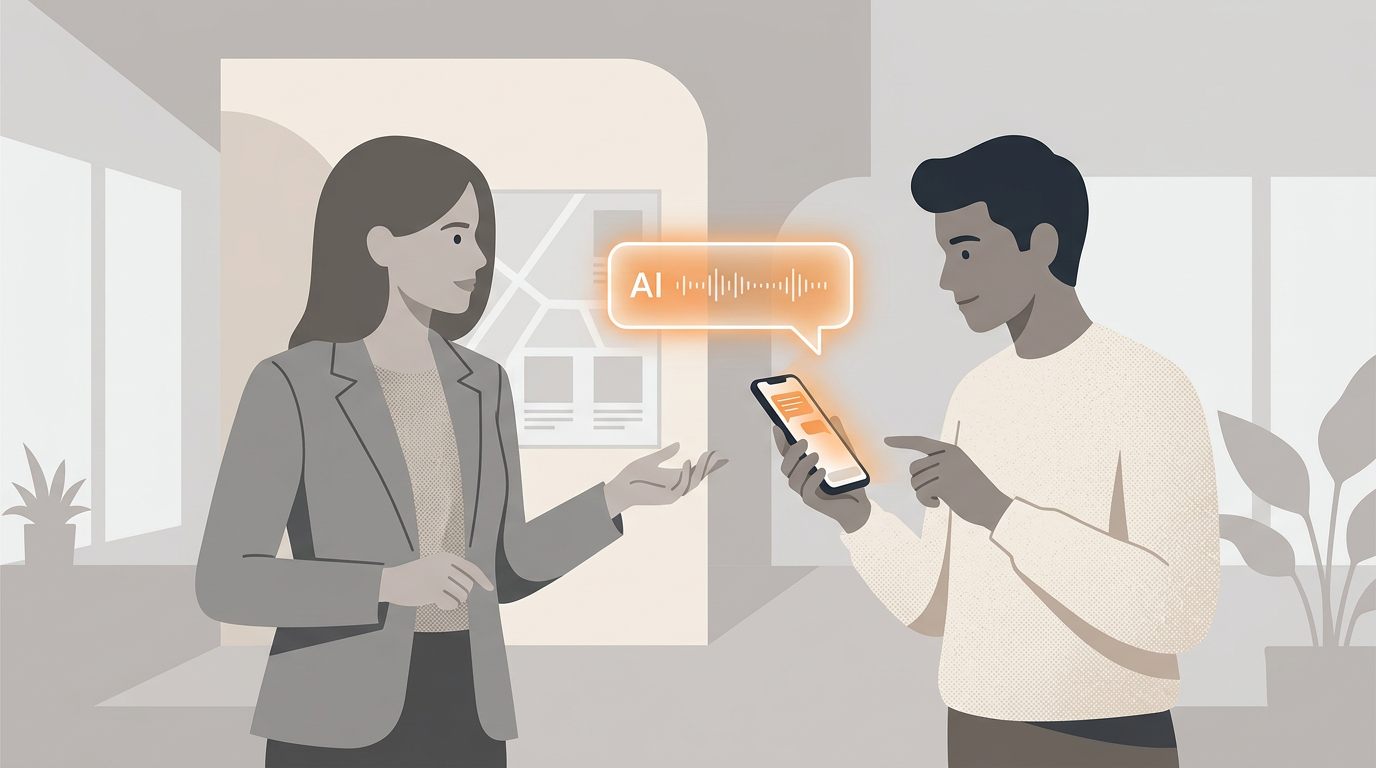
By the time a buyer texts you "is this still available?", they've usually already had a longer conversation with a machine.
They asked it what a fair offer looks like. They pasted the listing description and asked what the agent "isn't telling them." They asked whether they should waive the inspection, what closing costs really run, and in a growing number of cases, whether hiring a buyer's agent is worth it at all. Then they messaged you, holding answers you didn't give them.
Buyers aren't just more informed. They're pre-coached, by something that talks back.
The buyer already did the research, just not the way you think
The old version of "informed buyer" meant someone who browsed Zillow for six months and memorized comps. Annoying, but predictable. You knew what they'd seen.
And these buyers aren't reading ten articles. They ask one question and get a confident, paragraph-long answer that sounds authoritative whether it's right or not.
That last part matters. The AI doesn't hedge. It tells your buyer "offering 8% under asking is reasonable in a buyer's market" without knowing that this specific listing already has two offers. So your buyer shows up anchored to a number, certain about it, and a little suspicious of anyone who disagrees. You're no longer correcting a blank slate. You're arguing with a chatbot that already won their trust.
And this only goes one direction. Among Gen Z buyers, 70% already use generative AI in their search; for Boomers it's 22%. The youngest, most AI-native buyers are the ones aging into the market, which means the share of pre-coached leads in your inbox climbs every year. This isn't a phase to wait out. It's the new baseline forming in real time.
Why this breaks your usual playbook
Most agents are trained to lead with information. Explain the process. Walk through comps. Educate the buyer. That whole approach assumes you're the first expert in the room.
You're not anymore. When you explain something the AI already told them, you sound redundant. When you contradict something the AI told them, you sound self-interested, because the machine had no commission on the line and you do. Either way, the buyer's guard goes up.
The instinct is to fight the AI head-on. "Those tools don't know your local market." True, but saying it makes you the defensive one, and defensive is the worst posture in a market where buyers are already primed to question your value. The settlement changes from 2024 taught them to ask "why do I need you." A chatbot just gave them a script for it.
What actually works now
The agents winning these conversations stopped trying to be the source of information. They became the source of judgment.
Open with "What's ChatGPT been telling you about this one?" It disarms instantly. The buyer expected you to pretend you're their only resource. Instead you're curious about their research, which makes you the calm one in the room. You also learn exactly what they've been anchored to.
Don't say "AI doesn't understand local markets." Say "It told you 8% under is fair, and in a vacuum it's right. But this one had a price drop three weeks ago and a backup offer already fell through, so 8% under gets you beaten. Here's what I'd actually send." You're not dismissing the tool. You're adding the thing it structurally cannot know: what's happening right now, off the page.
A buyer who's been AI-coached often arrives with quiet objections they never voice, the kind that surface in the texture of their replies. Shorter messages. A sudden focus on fees. A question that's really a test. The deals that slip away usually leave a trail in the conversation first, and reading that trail, message by message, is where most agents are still flying blind.
Tools like Lead Leap exist to surface exactly those shifts from your chat threads, but even a careful re-read of the last ten messages will tell you more than you think.
The machine is great at general answers. It is useless at standing in a kitchen and noticing the foundation crack the seller painted over, at calling the listing agent to find out the sellers are quietly desperate, at talking a nervous buyer off the ledge at 9pm before they blow up their own deal. That's not information. That's judgment under pressure, and it's the one thing that doesn't get cheaper when AI gets better.
The shift to make this week
Stop treating the first message as the opening of the conversation. It's the middle. Someone, or something, got there before you.
So change your first question. Instead of launching into your process, ask what they've already figured out, and what they've been told. You'll find out in thirty seconds what used to take three meetings: what they believe, where they're anchored, and which of those beliefs is about to cost them the house.
Then you do the one thing the chatbot can't. You tell them the truth about this deal, the one that isn't in any training data, because it's happening right now.